Posts Tagged ‘Origin of Species’

Ardi About-Face


This year, 2010, has not been a good year for the “out of Africa” evolutionary theory of human origins. The following is why.

In October 2009, Time Magazine recognized Ardipithecus ramidus, now known as “Ardi,” the number one of “Top 10 Scientific Discoveries” of 2009. The journal Science declared Ardi the “breakthrough of the year.”

Ardi, an nearly complete fossilized female skeleton, was discovered by Timothy Douglas White, an American Paleoanthropologist and Professor of Integrative Biology at the University of California, Berkeley in the arid badlands near the Awash River in Ethiopia in 1994.

Examination and description of Ardi took nearly 15 years before releasing publication. Although it is not known whether Ardi’s offspring actually developed into Homo sapiens, the discovery was expected to be of great significance since Ardi is the oldest known hominid fossil. Ardi had been theorized to be an ancestor to Australopithecus afarensis, more commonly known as Lucy.

John Noble Wilford, science writer for the New York Times reported that David Pilbeam, a professor of human evolution at Harvard University said that the Ardi skeleton represents “a genus plausibly ancestral to Australopithecus [Lucy]” and began ‘to fill in the temporal and structural ‘space’ between the apelike common ancestor and Australopithecus.”

In the excitement, the Discovery Channel produced a series of articles and videos arguing how Ardi, not the chimpanzee, were the common ancestors to humans. The American Association for the Advancement of Science, publisher of the journal Science, developed an educational series in five separate publications on Ardi.

Since Ardi was discovered in east Africa, the finding gained further support for the popular “out of Africa” model first proposed by Charles Darwin. In The Descent of Man, Darwin hypothesized - 

In each great region of the world the living mammals are closely related to the extinct species of the same region. It is, therefore, probable that Africa was formerly inhabited by extinct apes closely allied to the gorilla and chimpanzee; and as these two species are now man’s nearest allies, it is somewhat more probable that our early progenitors lived on the African continent than elsewhere

Almost fifty years after the publication of The Descent of Man, Darwin’s speculations seemed to be supported following the discovery of numerous hominid fossils in several areas of Africa. The “out of Africa” model continued to be the most widely recognized theory since the publication of the Descent of Man—until May 2010.

Svante Pääbo of the Department of Evolutionary Genetics at the Max-Planck Institute for Evolutionary Anthropology in Germany published in the journal Science in May 7, 2010, an article on the sequencing of the genome of the Neanderthal man entitled “A Draft Sequence of the Neanderthal Genome”.

According to Gregory Hannon of Cold Spring Harbor Laboratory in Laurel Hollow, N.Y., Svante Pääbo’s “publication of the full Neanderthal genome is a watershed event, a major historical achievement.” Pääbo noted, “In some of us they live on, a little bit” with on major caveat – not in African descendants.

Mark Henderson, science writer for The Sunday Times, London, explains – “Human genomes from France, China, and Papua New Guinea showed Neanderthal signatures, but not those from West and Southern Africa.” The absence of Neanderthal genetic evidence in Africans has devastated Darwin’s treasured “out of Africa” theory pushing the relevance of Ardi as an ancestor to humans into extinction.

Genetics is not Ardi’s only problem with the “out of Africa” theory—so is the paleontological analysis. Time Magazine, and the journals Nature and Science, after more thoroughly examining the available data, has started slow process of recanting on the role of Ardi as an early ancestor to man.

In the Time article entitled “Ardi: The Human Ancestor Who Wasn’t” now highlight that “Two new articles being published in Science question some of the major conclusions of Ardi’s researchers, including whether this small, strange-looking creature is even a human ancestor at all.”  

The British science journal Nature reports: “Ardi may be more of an ape than human.” In the article, Esteban Sarmiento, a primatologist at the Human Evolution Foundation argues in the article Comment on the Paleobiology and Classification of Ardipithecus ramidus, that the Ardi could not be an evolutionary ancestor to humans:

[White] showed no evidence that Ardi is on the human lineage…. Those characteristics that he posited as relating exclusively to humans also exist in ape and ape fossils that we consider not to be in the human lineage.

With Ardi as the celebutante, the evolution industry, in desperation to connect the dots for a human evolution theory, has once again fallen into another humiliating about-face based on the inescapable scientific evidence.

As the “out of Africa” model undergoes extinction, scientists are beginning to investigate the “multiregional origin of humans” theory in which man is simply “a single, continuous human species”—a theory approaching the recorded biblical account for the origin of man.


Count Chromosomes

Ignorance more frequently begets confidence than does knowledge.  Charles Darwin

Darwin argued in The Origin of Species that evolution develops through the processes of natural laws, changing the simple into the complex, in ways analogous to the laws of gravity -

[W]hilst this planet has gone cycling on according to the fixed law of gravity, from so simple a beginning endless forms most beautiful and most wonderful have been, and are being, evolved.

The chromosome is the organizational structure of DNA and proteins in cells. DNA contains the nucleotide sequences that form the genes. During the twentieth century, determining the number of chromosomes in species has been in the investigative forefront.

Since Darwin envisioned that “natural selection acts solely by accumulating slight, successive, favourable variations; it can produce no great or sudden modifications”, according to the theory, chromosomes were expected to demonstrate evolution from the simple into the more complex via “slight, successive” changes.  

While the simplest known organism, Mycoplasma hominis, does have only one chromosome, Darwin’s simple to complex theory quickly breaks down. Unless the Gorilla, Chimpanzee, Cow, Guinea Pig, and Goldfish evolved from Humans, the simple to complex theory of evolution is simply incompatible with the scientific evidence.

If natural selection acts only, as Darwin suggests, by “slight, successive” changes and “must advance by the short and sure, through slow steps, then scientific evidence from chromosomes clearly contradicts the Darwinian theory of evolution.

In the book Why Evolution is True, Jerry Coyne conveniently and completely overlooks the lack of evidence for “slight, successive” changes in chromosomes. Coyne never even listed the term “chromosome” the Index. Reason—chromosomal evidence destroys the theory of evolution.

Niles Eldridge of the American Museum of Natural History in his companion book Darwin – Discovering the Tree of Life for the Darwin exhibit never mentions that the “slight, successive” sequences of the chromosome never happened. Evolutionist avoid chromosome like the plague. Reason, again—chromosomal evidence destroys the theory of evolution.

The evolution of the chromosome parallels horse evolution tales. Swedish geneticist Heribert Nilsson pointed out as early as 1954 that the “family tree of the horse is beautiful and continuous only in the textbooks.”

In 1996, Stephen J. Gould used stronger words in his book Full House: The Spread of Excellence From Plato To Darwin, concluding that the “popularly told example of horse evolution, suggesting a gradual sequence of changes… has long been known to be wrong.” Rather than “slight, successive” changes as envisioned by Darwin, “fossils of each intermediate species appear fully distinct, persist unchanged, and then become extinct. Transitional forms are unknown.”

Bemoaning the continued use of what he termed “misinformation,” such as horse evolution, Gould, in 2000, pined in a 2000 article that appeared in the journal Natural History – “Once ensconced in textbooks, misinformation becomes cocooned and effectively permanent, because … textbooks copy from previous texts.”

In the molecular world, biochemist Richard E. Dickerson at Cambridge University notes that the “more one approaches the molecular level in the study of living things, the more similar they appear, and the less important the differences between, for instance, a clam and horse become.”

Molecular biologist Michael Denton clarifies – “Instead of revealing a multitude of transitional forms through which the evolution of the cell might have occurred, molecular biology has served only to emphasize the enormity of the gaps.”

Mounting scientific evidence continues to erode any known comprehensive theory of evolution. The evolution industry should heed Darwin’s warning that “[i]gnorance more frequently begets confidence than does knowledge” by starting to count chromosomes.

Darwin Legacy of Influence


The Darwin’s were the Kennedy’s of the nineteenth century—a powerhouse of influence.

Darwin’s grandfather, Erasmus Darwin, was a prominent and wealthy English physician. As a physician in Lichfield from 1756 to 1781, he acquired a reputation for being a great healer. He was so successful that King George III asked him to be his doctor, but Erasmus Darwin refused the appointment.

Erasmus was a noted naturalist, writer, poet, inventor, and founding member of the infamous Lunar Society. Lunar members were of influence, becoming the engine-driving force of the British Industrial Revolution.

As a writer, Erasmus authored several important works of poetry and science. His most important published work was a book entitled Zoönomia, Latin for “law of life,” published in 1794. In Zoönomia, Erasmus endorsed the basic emerging tenets of evolution, asking the question in the affirmative - 

Would it be too bold to imagine that all warm-blooded animals have arisen from one living filament… continuing to improve by its own inherent activity, and of delivering down these improvements by generation

At Edinburgh University, Darwin studied under Professor Robert Edmund Grant, a proponent of evolution. Grant was a student of Erasmus Darwin, quoting from Zoönomia in his doctoral thesis. In England, Erasmus ignited the evolution industry. 

Aboard the HMS Beagle, by British custom, the ship’s surgeon traditionally took the position of the official “naturalist.” Darwin’s role was to be a “gentleman’s naturalist” and assist Robert McKormick and Captain Robert FitzRoy. Ashore, though, it was Darwin and not McKormick that received the notoriety and invitations from dignitaries. McKormick was upstaged by Darwin.

Being sufficiently disgruntled, McKormick left the Beagle at Rio de Janeiro just months after sailing from the docks in Plymouth harbor in 1832. McKormick’s status was “invalided out” back to Britain. Darwin assumed McKormick’s naturalist duties. The fame of the Darwin name was widespread, even along the South America coastline.

Little wonder, Darwin was recommended by his Cambridge University professor, John Stevens Henslow to Robert FitzRoy, the captain of the HMS Beagle—an elite selection process comparable to a twenty-first century NASA space appointment. 

Just after returning from the HMS Beagle voyage in October 1836, Darwin’s influence amongst intellectuals rapidly spread. Just a few months after returning from 5 years abroad, in February 1837 Darwin was elected to the British Council of the Geographic Society.

Self-esteem issues were certainly not a problem. In his autobiography, Darwin gives a self-evaluation - 

I think that I am superior to the common run of men

In January 1839, Darwin was elected as a fellow to the most prestigious scientific organization in the world, the Royal Society. The Darwin legacy of influence and privilege long preceded the publication of The Origin of Species

On the day the first edition of The Origin of Species was released in 1859, all 1250 copies were sold. The book was an immediate success: the Harry Potter of the nineteenth Century.

Following in the legacy of Darwin influence and privilege, long before the publication of The Origin of Species in 1859, the evolution industry was well developed in eager intellectual circles even though Darwin clearly acknowledged that the theory was not supported by the evidence -

I am quite conscious that my speculations run quite beyond the bounds of true science.

The Darwin legacy of influence continues, sadly.

Darwin Recant?


Myths have circulated that Charles Darwin recanted the theory of evolution while he was dying. Some of the stories read like this: “Shortly after Darwin’s death at seventy-four on April 19, 1882, the evangelistic widow of Admiral of the Fleet Sir James Hope [Lady Hope] told a gathering of students at Northfield Seminary in Massachusetts that she had visited Darwin in his last hours and found him reading the Epistle to the Hebrews. Darwin, she said, announced that he wished he ‘had not expressed my theory of evolution as I have done,’ and he also asked her to get some people together so he could speak to them of Jesus Christ and His salvation, being in a state where he was eagerly savoring the heavenly anticipation of bliss.”

Darwin’s family all denied the story and campaigned against it. Darwin’s son Francis wrote in a letter in May 1918: “Lady Hope’s account of my father’s views on religion is quite untrue. I have publicly accused her of falsehood, but have not seen any reply. My father’s agnostic point of view is given in my Life and Letters of Charles Darwin, Vol. I., pp. 304–317. You are at liberty to publish the above statement. Indeed, I shall be glad if you will do so.”

Darwin’s daughter Henrietta Litchfield also refuted the story, stating in the 1922 publication of The Christian: “I was present at his deathbed; Lady Hope was not present during his last illness, or any illness. I believe he never even saw her, but in any case, she had no influence over him in any department of thought or belief. He never recanted any of his scientific views, either then or earlier. We think the story of his conversion was fabricated in the U.S.A.… The whole story has no foundation what-so-ever.”

As an agnostic, Darwin was respected by his contemporaries, and even the Church of England. The Bishop of Carlisle, Harvey Goodwin, in a memorial sermon preached in the Abbey on the Sunday following the funeral, launched to bridge the agnostic-belief gap by stating -

I think that the interment of the remains of Mr. Darwin in Westminster Abbey is in accordance with the judgment of the wisest of his countrymen … It would have been unfortunate if anything had occurred to give weight and currency to the foolish notion which some have diligently propagated, but for which Mr. Darwin was not responsible, that there is a necessary conflict between a knowledge of Nature and a belief in God.

The bishop along with the Church of England could not have been more naive—Darwin unleashed the wave of atheism. In The Blind Watchmaker, leading atheist Richard Dawkins wrote –

although atheism might have been logically tenable before Darwin, Darwin made it possible to be an intellectually fulfilled atheist.

Evolution now reigns as the explanation for the origins and meaning of life lead by the British zoologist, Richard Dawkins who explains –

It is absolutely safe to say that if you meet somebody who claims not to believe in evolution that person is ignorant, stupid, or insane.

The rise of atheism early in the twentieth century, rather than bringing an age of enlightenment, became the breeding fields for the bloodiest century in history—largely at the hands Hitler, Stalin, Lenin, and Mao. Contrary to Dawkins contention, the theory of evolution unleashed worldwide insanity—not peace.

Certainly, Darwin was critical of his own arguments for evolution in The Origin of Species. In a letter to Hugh Falconer in October 1862, Darwin wrote,

I look at it as absolutely certain that very much in the Origin will be proved to be rubbish

In the wake of 150 years of unprecedented scientific research on the fossil record, embryology, molecular biology, and genetics, the theory of evolution remains as it started —“rubbish.” However, any recanting document prior to his deathbed experience in April 1882 continues to escape the reach of historians.

Since Darwin’s “innumerable” transitional species never existed on the Earth and natural selection never earned scientific vindication, today evolution continues more in crisis now than at any other time since the publication of The Origin of Species.  

Tragically, Darwin’s theory, supported by the likes of Harvey Goodwin in the church, blinded to the incompatibility of evolution with natural history following the abandonment of the Genesis account, continues to extract an immeasurable cost from humankind.

Extinction by Eugenics


In The Origin of Species, Charles Darwin wove the eugenic philosophy of Plato into the theory of natural selection

extinction and natural selection go hand in hand

Ancient civilizations, including Rome, Athens, and Sparta, practiced what has become known as eugenics to ensure only the strongest survived.

Darwin uses “extinction” occurs 74 times in the sixth edition; “evolution” is not mentioned once. Encouraged by his brother, Erasmus, Darwin read An Essay on the Principle of Population by Thomas Robert Malthus, an English political economist in 1838. Darwin recalls in his Autobiography the sentinel moments: 

In October 1838 … I happened to read for amusement Malthus On Population, and being well prepared to appreciate the struggle for existence which everywhere goes on from long-continued observation of the habits of animal and plants, it at once struck me that under these circumstances favorable variations would tend to be preserved, and unfavorable ones to be destroyed. The result of this would be the formation of new species. Here, then, I had at last got a theory by which to work.

The origin of natural selection theory was rooted in behaviors in the struggle for existence, a behavioral science. As Darwin explains, “This is the doctrine of Malthus … [that] many more individuals of each species are born than can possibly survive; and … consequently, there is a frequently recurring struggle for existence” was the foundation of Darwin’s theory of natural selection:

Natural Selection, entailing Divergence of Character and the Extinction of less improved forms… from the war of nature, from famine and death, the most exalted object which we are capable of conceiving, namely, the production of the higher animals, directly follows.

Sir Francis Galton, Darwin’s cousin after reading The Origin of Species, extended Darwin’s concept of natural selection. After sketching out his theory in the 1865 article “Hereditary Talent and Character,” Galton further elaborated in his 1869 book Hereditary Genius.

Galton reasoned, like Darwin, artificial selection in animals would produce similar results in humans. In the introduction to Hereditary Genius, Galton wrote -

to obtain by careful selection a permanent breed of dogs or horses gifted with peculiar powers of running, or of doing anything else, so it would be quite practicable to produce a highly-gifted race of men by judicious marriages during several consecutive generations.

In 1883, Galton coined the term ‘eugenics’ [Greek: εύ (eu) meaning ‘well’ and γένος (genos) meaning ‘kind’ or ‘offspring’] for the study of ways of improving the physical and mental characteristics of the human race.

Galton’s eugenics movement operationalized Darwin’s view to preserve favored races. The complete title of The Origin of Species is On the Origin of Species by Means of Natural Selection, or the Preservation of Favoured Races in the Struggle for Life.

Darwin endorsed Galton, referring to Galton no less than eleven times in The Descent of Man (1871). The practice of eugenics quickly became an institutionalized worldwide phenomenon.

Galton became a legend, receiving the Huxley Medal from the Anthropological Institute in 1901, the Darwin Medal from the Royal Society in 1902, the Darwin–Wallace Medal from the Linnaean Society in 1908, and honorary degrees from Cambridge and Oxford Universities. Galton was knighted in 1909.

Adolf Hitler recognized Sparta as the first “Völkisch State.” Three International Eugenics Congresses were held in 1912, 1921, and 1932, with eugenics activists attending from Britain, the USA, Germany, France, Australia, Canada, India, Japan, Mauritius, Kenya, and South Africa.

By 1913, one-third of the U.S. states had laws allowing for the compulsory sterilization. In Sweden, about sixty thousand were similarly treated between 1935 and 1976, as did Norway and Canada.

Early during the Nazi regime in Germany, Hitler ordered the compulsory sterilization of all German citizens with ‘undesirable’ handicaps, not just those held in custody or in institutions. This was to prevent ‘contamination’ of Hitler’s ‘superior German race’ through intermarriage.

Later during the regime from 1938 to 1945, this surgical treatment of such ‘useless eaters’ was superseded by a more comprehensive solution—genocide. Hitler ordered the extermination of over eleven million people considered sub-human or unworthy of life. As authenticated and documented by the Nuremberg Trials records, the sub-humans included Jews, evangelical Christians, blacks, gypsies, and the physically and mentally handicapped.

Eugenics is Darwinism on steroids. 


Buy Now


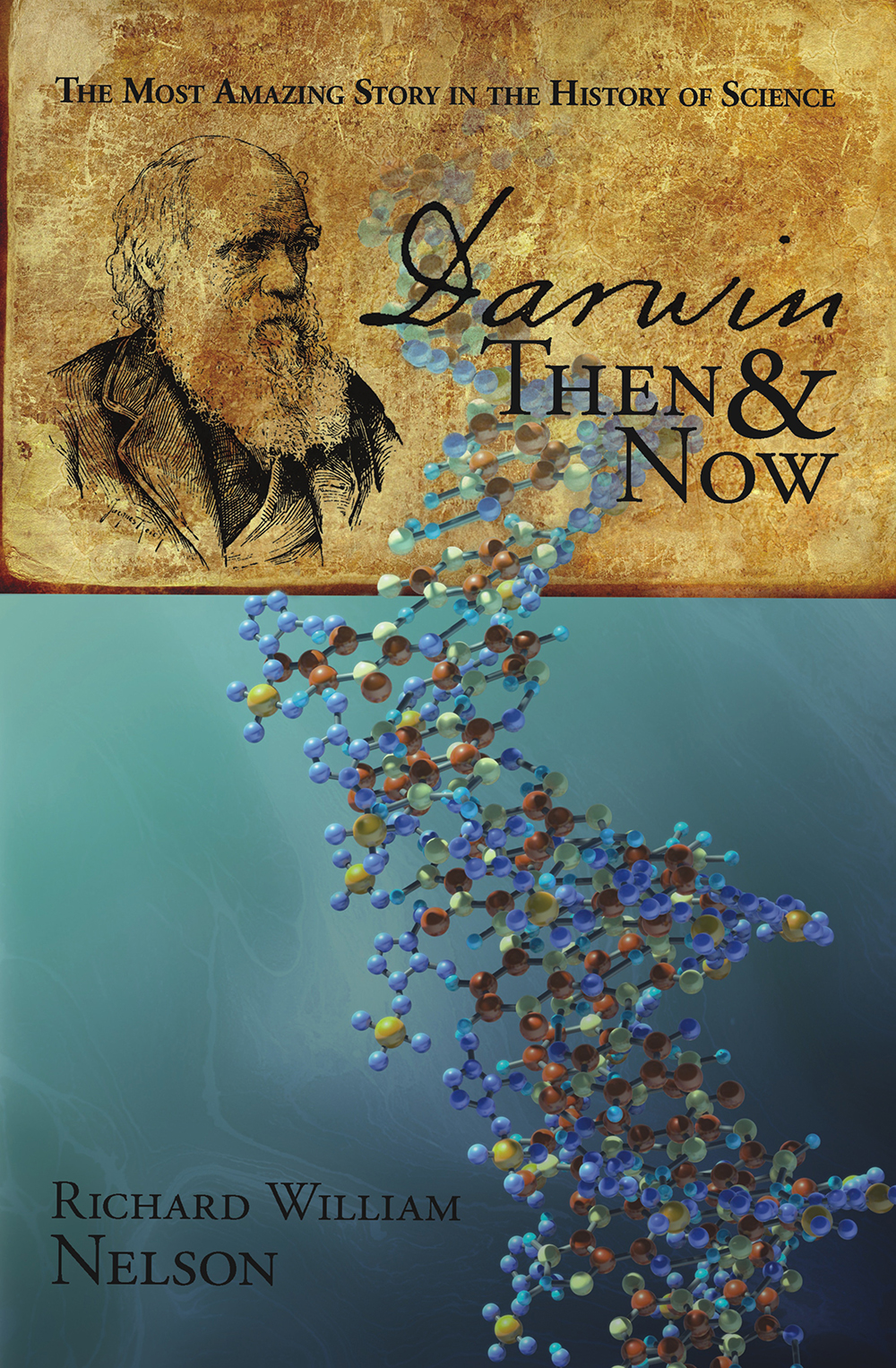
SCIENCE WAR. A war is raging over the scientific evidence. Discover the history behind the rise and fall of Darwinism during the past 150 years in this narrative on the history of evolution—with over 1,000 references quoting directly from scientists. With Charles Darwin as the central main character, Darwin Then and Now defines how the accumulating evidence has developed the battle lines of this twenty-first century war. Darwin evolutionists lost in dogmatism definitely do not want anyone to read this documentary. The reason—lifting the veil on the history of evolution threatens the very foundations of the evolutionary establishment.

Social Networking