Posts Tagged ‘human evolution’

Ida Fossil Fiasco


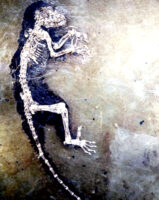
“This little creature is going to show us our connection with the rest of all the mammals; with cows and sheep, and elephants and anteaters,” said Sir David Attenborough who narrated the BBC documentary in May 2009. “The more you look at Ida, the more you can see, as it were, the primate in embryo.”
“It tells a part of our evolution that’s been hidden so far. It’s been hidden because the only [other] specimens are so incomplete and so broken there’s nothing almost to study”, said Dr Jørn Hurum, the paleontologist from Oslo University’s Natural History Museum who assembled the scientific team. The fossil findings were released to the world at a press conference in New York, simultaneously with online publication of the paper in Public Library of Science (PLoS ONE) on May 19, 2009.

At the opening press conference, the fossil was described as the “missing link” in human evolution. “This fossil rewrites our understanding of the evolution of primates… It will probably be pictured in all the textbooks for the next 100 years”, claimed the Ida investigative team. Ida was interpreted as our “human ancestor”—the first and only one known.

The fossil had even been formally named Darwinius masillae in honour of Darwin’s 200th birthday year during 2009.  

The widely publicized Darwinius paper was released along with a book entitled The Link: Uncovering Our Earliest Ancestor, a DVD entitled The Link, This Changes Everything,  a History Channel documentary, and an exhibit in the American Museum of Natural History. At a news conference attended by New York Mayor Michael Bloomberg, the authors unveiled the nearly complete Darwinius masillae fossil found in Germany. The New York Daily News noted,

“The unveiling of the fossil came as part of an orchestrated publicity campaign unusual for scientific discoveries.”

As the Darwinian celebrations were sinking into the sand by the end of 2009, however, so was the “missing link” status of Ida as scientists continued to analysis the fossil. By October 2009, the BBC retracted their position running ran an article entitled “Primate Fossil ‘Not an Ancestor’”, stating,

“The exceptionally well-preserved fossil primate known as “Ida” is not a missing link as some have claimed.”

The sand-sinking fossil fiasco was finalized following the March 2010 article in the Journal of Human Evolution by paleontologists Blythe Williams, Richard Kay, Christopher Kirk, and Callum Ross confirming initial suspicions that the original description of Darwinius which appeared in the journal PLoS One was fatality flawed.

The updated analysis by Williams and team members painted a damning picture of the original Darwinius study. The team reports that the features of bones in the skull teeth, and limbs clearly demonstrate that Ida is not even a primate—certainly not a human ancestor.

In March 2010 news editor for the NewScientist, Rowan Hooper, published the article entitled Confirmed: Fossil Ida is Not a Human Ancestor stating – “About a year ago we were stunned in the New Scientist offices to learn of a beautiful, 47-million-year-old primate fossil which was being hyped as the ancestor to all humans. Nicknamed ‘Ida’, The Guardian newspaper hailed it as “the eighth wonder of the world… Now an independent team has examined the fossil in detail. In a paper in the Journal of Human Evolution they strongly argue that Darwinius is not one of our ancestors.”

The Ida fossil announcement in PLoS ONE followed the same pattern as the Archaeoraptor fossil disaster announcement in National Geographic magazine in 1999. This pattern follows a strict evolutionary paradigm approach where ideology drives the interpretation. Ida serves yet another example how the evolution paradigm distorts and stifles scientific investigation and undermines the credibility of the modern scientific establishment.

Ida and Archaeoraptor join a long line of fossil fiascos, including Archaeopteryx, Java Man, and the Piltdown man. Fossil fraud and deception by the evolution industry continues to pervade the history of evolutionary, perhaps because the fossil record evidence continues to contradict the Darwinian theory of evolution.

“No wonder paleontologists shied away from evolution for so long”, pines Niles Eldredge, evolutionary paleontologist, “It seems never to [have] happen[ed].”

Douglas Futuyma, president of the Society for the Study of Evolution and the American Society of Naturalists, editor of Evolution, abandoned Darwinism stating,

“The supposition that evolution proceeds very slowly and gradually, and so should leave thousands of fossil intermediates of any species in its wake, has not been part of evolutionary theory for more than thirty years.”

Ida fossil highlights again the reasons why evolution remains a theory in crisis—the fossil record evidence continues to contradict the Darwinian theory of evolution.  

Chimp Genetics Radically Different

In a letter to Sir Joseph Dalton Hooker, his closet friend in 1857, Charles Darwin confided,

I cannot swallow Man [being that] distinct from a Chimpanzee.

Charles Darwin writes in his Autobiography,

My Descent of Man was published in Feb. 1871. As soon as I had become, in the year 1837 or 1838, convinced that species were mutable products, I could not avoid the belief that man must come under the same law

The chimp, since the nineteenth century, has been the poster-child missing link to humans. In twenty-first century terms, the mammalian Y chromosomes were expected to be similar, as speculated by Darwin. However, new evidence demonstrates Darwin’s speculation to be wrong—the chimp Y chromosome differs radically from humans.

The British journal Nature published a paper in January 2010 titled, “Chimpanzee and Human Y Chromosomes are Remarkably Divergent in Structure and Gene Content,” found that Y chromosomes in the chimp and humans “differ radically in sequence structure and gene content”. In fact,

More than 30% of the chimp Y chromosome lacks an alignable counterpart on the human Y chromosome

Jennifer F. Hughes led the research team at the Whitehead Institute for Biomedical Research, one of the world’s leading centers for genomic research, is located in Cambridge, Massachusetts. The research team concluded –

By comparing the MSYs of the two species we show that they differ radically in sequence structure and gene content

“By conducting the first comprehensive interspecies comparison of Y chromosomes,” ScienceDaily noted, “Whitehead Institute researchers have found considerable differences in the genetic sequences of the human and chimpanzee Ys… The results overturned the expectation that the chimp and human Y chromosomes would be highly similar. Instead, they differ remarkably in their structure and gene content.”

The original chimp genome sequencing completed in 2005 largely excluded the Y chromosome because its hundreds of repetitive sections had typically confound standard sequencing techniques. The chimp Y chromosome is only the second Y chromosome to be comprehensively sequenced.

 Wes Warren, Assistant Director of the Washington University Genome Center, noted

These findings demonstrate that our knowledge of the Y chromosome is still advancing.

Earlier comparative studies between the chimp and human genome had centered on DNA regions that only result in the production of proteins. In addition, not only is the chimp DNA 12% larger than human DNA, the Chimp has 23 chromosomes while humans have only 22 (excluding sex chromosomes in both species).

While the researchers advance the concept that “divergence” from the Chimp occurred 6 million years ago, the more logical explanation is that the chimp is simply a distinct species.

The research was funded by the National Institutes of Health (NIH) and the Howard Hughes Medical Institute (HHMI)

Darwin, DNA, and the Neanderthals


Just three years before the publication of The Origin of Species, in 1856, the first Neanderthal fossils were discovered in the Neander Valley limestone quarry located in Germany.  

In The Descent of Man, however, Darwin argued against the concept that the Neanderthals were the ancestors to humans based on the larger size of the Neanderthal skull.

“Nevertheless,” Darwin noted, “it must be admitted that some skulls of very high antiquity, such as the famous one of Neanderthal, are well developed and capacious”—the skull was too large to be a human ancestor.

Darwin was right. The journal Science on May 7, 2010, published an article entitled “A Draft Sequence of the Neandertal Genome,” confirming Darwin’s position that the Neanderthal could not be an ancestor to humans. According to Gregory Hannon of Cold Spring Harbor Laboratory in Laurel Hollow, N.Y., the “publication of the full Neandertal genome is a watershed event, a major historical achievement.” 

Svante Pääbo of the Department of Evolutionary Genetics at the Max-Planck Institute for Evolutionary Anthropology in Germany led the study team. “[Neanderthals] are not totally extinct,” Pääbo said. “In some of us they live on, a little bit.”

John Hawks, assistant professor of anthropology at the University of Wisconsin, told BBC News: “They’re us. We’re them.”

“[T]he really surprising thing for many of us,” noted Professor Chris Stringer, research leader in human origins at London’s Natural History Museum, “is the implication that there has been some interbreeding between Neanderthals and modern humans in the past.”

This interbreeding finding is a monumental discovery since interbreeding is a defining factor for defining a species. Our current modern definition of species was developed by Ernst Mayr—Darwin’s Bulldog of the twentieth century.

In the 1942 book entitled Systematics and the Origin of Species, Ernst Mayr established the Biological Species Concept (BSC): species consist of populations of organisms that can reproduce with one another and are reproductively isolated from other such populations. Since humans and Neanderthals are now known to be isolated reproductive populations, they represent a single species—”They’re us. We’re them.”

Sequencing of the Neanderthal genome is a landmark scientific achievement. The sequencing is a culmination of a four-year investigation led from Germany’s Max Planck Institute.

Use of efficient “high-throughput” technology allowed the numerous DNA sequences to be processed at the same time from the bones of three different Neanderthals found at Vindija Cave in Croatia.

A major obstacle overcome in the study was the retrieval of quality DNA material from remains Neanderthal DNA contaminated with vast quantities of bacterial and fungal DNA. Even, the Neanderthal DNA had broken down into very short segments and had changed chemically. Since the contamination, breaks, and chemical changes were thought to be of a predictable nature, the researchers developed a software program to estimate the original DNA sequence of the Neanderthal genes.

The DNA evidence from the Neanderthal clearly aligns with the biblical account—the Neanderthals are human, descendants of Adam and Eve. Worldwide dispersion after Babel followed by environmental pressures afterward resulted in people groups with different physical characteristics, including humans with “Neanderthal” Characteristics.

Cellular biologist, David DeWitt, noted that the research was an “amazing feat” of science that continues to demonstrate the validity of the biblical record. “Finding Neanderthal DNA in humans was not expected by evolutionists, but it was predicted from a creation standpoint because we have said all along that Neanderthals were fully human: descendants of Adam and Eve just like us”.

Ida Missing Link?

IdaIda brands frenzied media blitz, an expose for “The Year of Darwin.” Malcolm Ritter of the Associated Press reported, “Scientists say they’ve found a “missing link.”

 On May 10, 2009, the Daily Mail published reports that the BBC had made a documentary revealing the discovery of what might be a vital ‘missing link’ in human evolution, giving an outline of the study and its intended publication date as well as a brief statement. On 15 May the Wall Street Journal carried a report with interviews, who cautioned that “Lemur advocates will be delighted, but tarsier advocates will be underwhelmed.” Around the same time, a press release headed “World Renowned Scientists Reveal a Revolutionary Scientific Find That Will Change Everything” announced that the find was “lauded as the most significant scientific discovery of recent times.”

 On May 19, 2009, the Ida investigative team headed by Jens Franzen revealed their findings to the world at a press conference, simultaneously with online publication of the paper in PLoS ONE. At the press conference, the fossil was described as the “missing link” in human evolution, and “This fossil rewrites our understanding of the evolution of primates… It will probably be pictured in all the textbooks for the next 100 years.”

 The authors and compared its importance to the Mona Lisa. The authors also said that Darwinius was “the closest thing we can get to a direct ancestor” and that finding it was “a dream come true”. Team member Dr Jens Franzen said the state of preservation was “like the Eighth Wonder of the World”, with information “palaeontologists can normally only dream of”, but while he said it bore “a close resemblance to ourselves” in some aspects, other features indicated that it was not a direct ancestor.

 The Franzen team should have searched for a more definitive conclusion; experts were quick to counter.

 Henry Gee, a senior editor at Nature, said the term “missing link” was misleading and that the scientific community would need to evaluate its significance.

“The PR campaign on this fossil is I think more of a story than the fossil itself,” said anthropologist Matt Cartmill of Duke University in North Carolina. “It’s a very beautiful fossil, but I didn’t see anything in this paper that told me anything decisive that was new.”

 Chris Beard, curator of the Carnegie Museum of Natural History, said he “would be absolutely dumbfounded if it turns out to be a potential ancestor to humans.”[

 “It’s not a missing link, it’s not even a terribly close relative to monkeys, apes and humans, which is the point they’re trying to make,” Carnegie Museum of Natural History curator of vertebrate paleontology Chris Beard said.

Ann Gibbons in “Revolutionary’ Fossil Fails to Dazzle Paleontologists” and published in ScienceNOW noted, “Many paleontologists are unconvinced.”

 Robert Roy Britt writing “Ida Fossil Hype Went Too Far” in LiveScience noted, “Problem is, most of the coverage is done, and the public could be left with the impression that Ida is a rock-solid missing link in the human evolutionary chain.”

 Ida’s unveiling was highly scripted with some “Barnum and Bailey aspects,” said paleontologist Richard Kay of Duke University. Britt continued, “More important, it can now be said the findings may well have been significantly overstated. We won’t know for sure until further research is done. But if this event causes the public to distrust science and media, that distrust is well placed.”

The Frenzied Darwin Day Fizzle

New York Times LogoThe anticipation around Charles Darwin’s 200th birthday celebration passed nearly unnoticed. Few media venues ventured to highlight the day. Perhaps, the struggling economy naturally selected the sullenness.

While researchers in Germany, announced completion of the first draft of the Neanderthal genome, to coincide with the 200th anniversary of Charles Darwin’s birth, the hoped for links to human evolution are still missing.

 The genome team led by geneticist Svante Paabo after isolating 3.7 billion base pairs could only conclude:  ”We’re currently analyzing if we see evidence in the Neanderthal genome of contribution from human ancestors,” Paabo said. “That question I think is still totally open.”

Again, this big golden nugget of evolution, like the fossil record, continues as the emperor without clothes. In the Guardian, palaeontologist Simon Conway Morris writes:

 “[P]erhaps now is the time to rejoice not in what Darwin got right, and in demonstrating the reality of evolution… “Isn’t it curious how evolution is regarded by some as a total, universe-embracing explanation, although those who treat it as a religion might protest and sometimes not gently. Don’t worry, the science of evolution is certainly incomplete.”

Even the New York Times writer, Carl Safina, in an essay for the science section entitled “Darwinism Must Die So That Evolution May Live” concludes, “So let us now kill Darwin.”

 After 150 years, since the natural mechanism of evolution that Darwin was looking for is still missing, in this post-modern evolution era the birthday party fizzled.


Buy Now

Kindle Edition Available


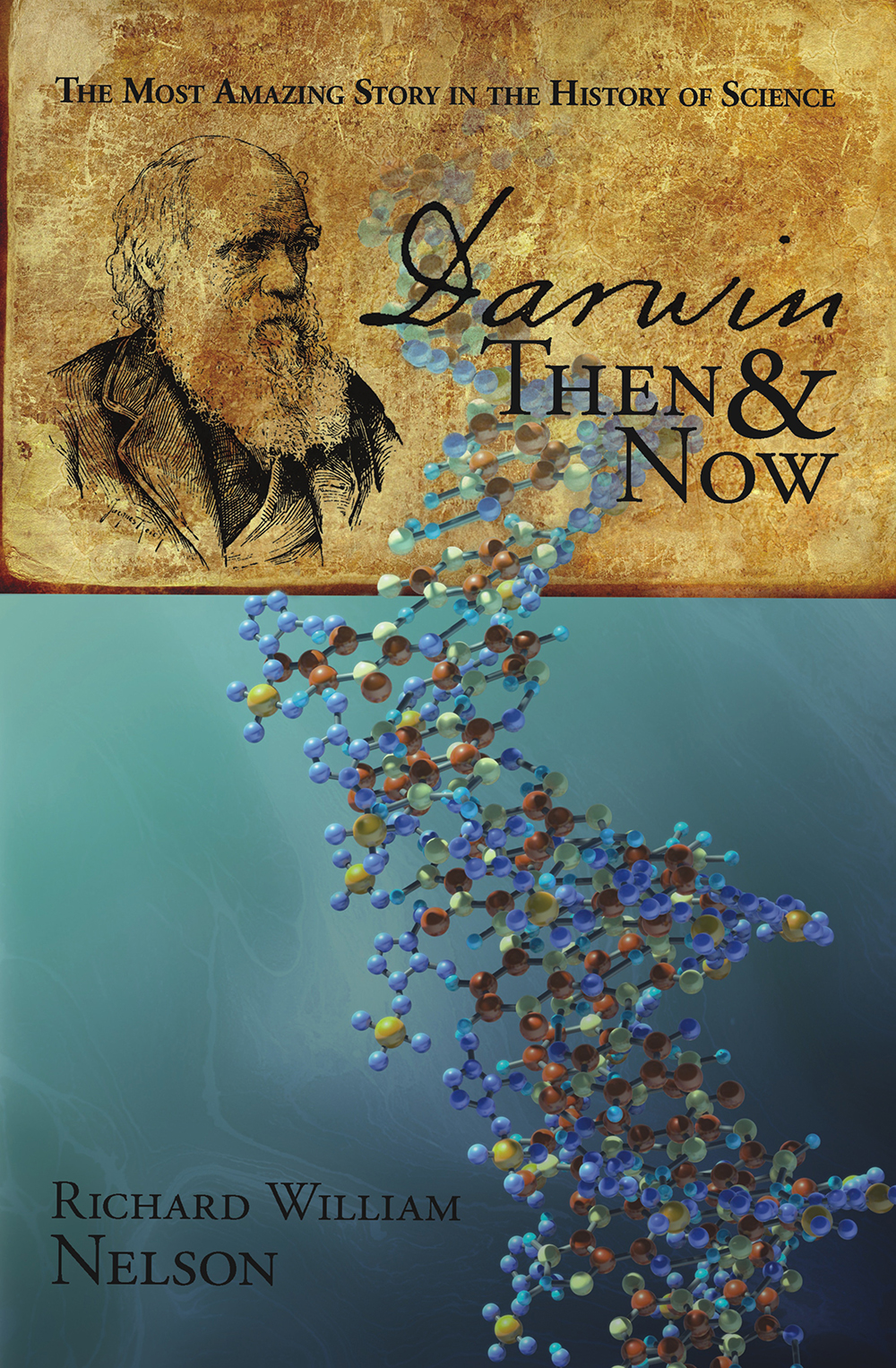
Darwin, Then and Now is a journey through the most amazing story in the history of science; encapsulating who Darwin was, what he said, and what scientists have discovered since the publication of The Origin of Species in 1859.

With over 1000 references from scientists, Darwin’s search for the natural law of evolution is investigated in the context of the evidence discovered in the Fossil Record, Embryology, Molecular Biology and Genetics.

Connect