by Richard William Nelson | Jan 25, 2020
 “We humans have many vestigial features proving that we evolved,” argues Jerry A. Coyne, Ph.D. (pictured left), biology professor at the University of Chicago. Coyne is the author of the book Why Evolution is True. Vestiges are biological features thought to be evolution relics. Scientific evidence, however, is critical; are evolution vestiges fact, or fiction?
Aristotle (384–322 BC) originated the vestiges theory. Even though WIKIPEDIA considers the theory as “controversial and not without dispute,” the carte blanche use of vestiges continues as supporting evidence for the popular “evolution is true” argument.
Recent advances in biotechnology, however, are challenging the scientific validity of the evolution vestiges theory.
Continue Reading
by Richard William Nelson | Oct 22, 2019
Dinosaurs found in unexpected places. In 1933, the Sinclair Oil Corporation sponsored an exhibit at the World’s Fair in Chicago. The Earth’s oil reserves, it was thought, formed during the era of the dinosaurs–the Mesozoic Era.
The exhibit was so popular, a silhouette of a green dinosaur, a Brontosaurus, became Sinclair’s official logo (pictured left). Gaining popularity a few decades later, at the New York World’s Fair in 1964, Sinclair introduced their expanded exhibit, called Dinoland, featuring life-size replicas of nine different dinosaurs, including their signature 27-foot tall and 70-foot long Brontosaurus. Admission was free.
Continue Reading
by Richard William Nelson | Sep 28, 2017
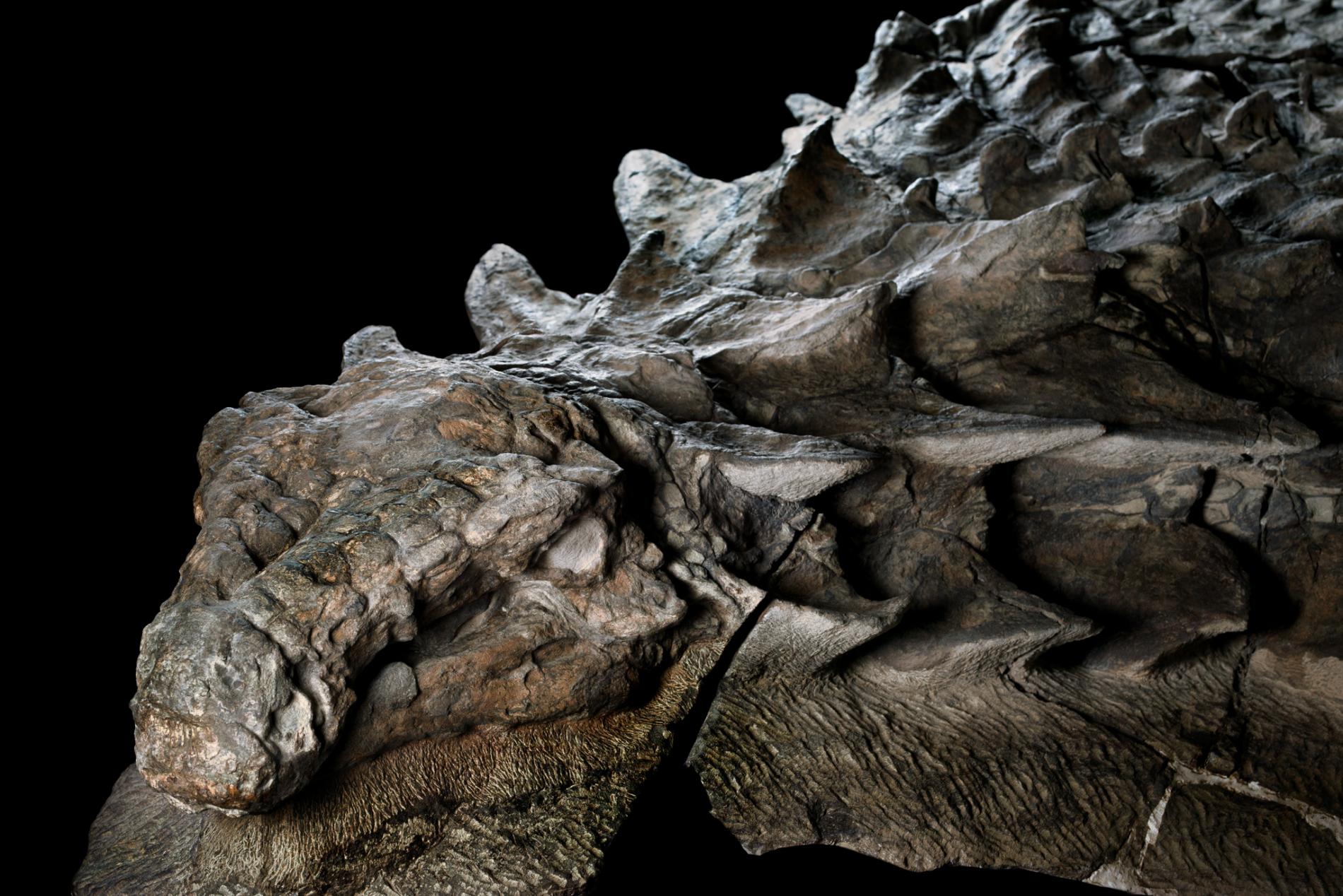
The armored dinosaur fossil, preserved in exquisite detail and unearthed in a western Canadian oil sand mine, highlights the new daunting challenges facing the theory of evolution.
This stunningly preserved fossil is shattering long-standing paradigms. “The more I look at it,” said Michael Greshko, science writer for National Geographic, “the more mind-boggling it becomes.”
Caleb Brown (picture-right), a paleobiologist at the Royal Tyrrell Museum, where the fossil was placed on exhibit in August, explained to Greshko,
“We don’t just have a skeleton… We have a dinosaur as it would have been.”
Continue Reading
by Richard William Nelson | May 24, 2017
Ancient fungal clues recently discovered off the coast of South Africa further stretch the boundaries of the theory of evolution.
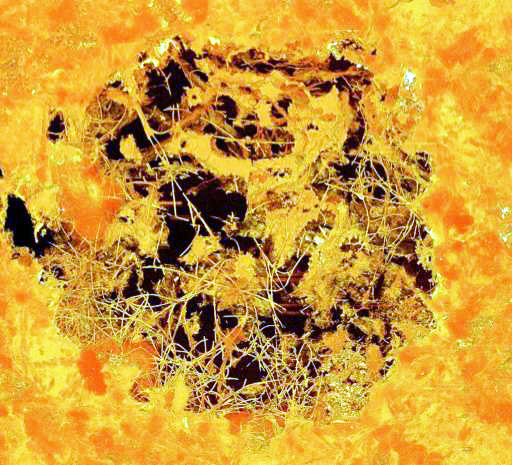
Birger Rasmussen, a geology professor at the Western Australian School of Mines, was drilling at a depth of 2,600 feet for the purpose of dating the ancient submarine lava in the Ongeluk Formation, estimated to be 2.4 billion years old in Northern Cape Province of South Africa, when he unexpectedly noticed what appeared to be microfilaments (pictured).
“I was startled to find a dense mesh of tangled fossilized microbes,” Rasmussen said in an interview with LiveScience writer Jerry Redfern last month. To Marlowe Hood, writing for Phys.org, Rasmussen recalled that “My attention was drawn to a series of petrified gas bubbles, and when I increased the magnification of the microscope, I was startled.” The bubbles were “filled with hundreds of exquisitely preserved filaments that just screamed ‘life.’” In the words of Science Alert writer Peter Dockrill, “It’s raising some big evolutionary questions.”
Continue Reading
by Richard William Nelson | Sep 18, 2014
New high-resolution CT scans of the Taung Child skull (pictured left) by an international research team led by Ralph L. Holloway of Columbia University in New York raise renewed questions about the institute’s inane Smithsonian evolution storytelling practices.
Discovered in 1924 in South Africa, models of the skull have been duplicated for natural history museums worldwide, including the Smithsonian, as evidence of human evolution. Found near Taung, South Africa, the lynchpin skull was tagged with the common name of Taung Child because of the fossil’s estimated age of 3 years. It was later named Australopithecus africanus, meaning the “southern ape from Africa.” However, Hollow’s new high-resolution CT scan images undermine the long-held pre-Homo fossil status of the skull.
Continue Reading

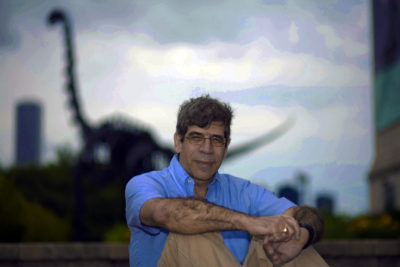 “We humans have many vestigial features proving that we evolved,” argues Jerry A. Coyne, Ph.D. (pictured left), biology professor at the University of Chicago. Coyne is the author of the book Why Evolution is True. Vestiges are biological features thought to be evolution relics. Scientific evidence, however, is critical; are evolution vestiges fact, or fiction?
 Dinosaurs found in unexpected places. In 1933, the